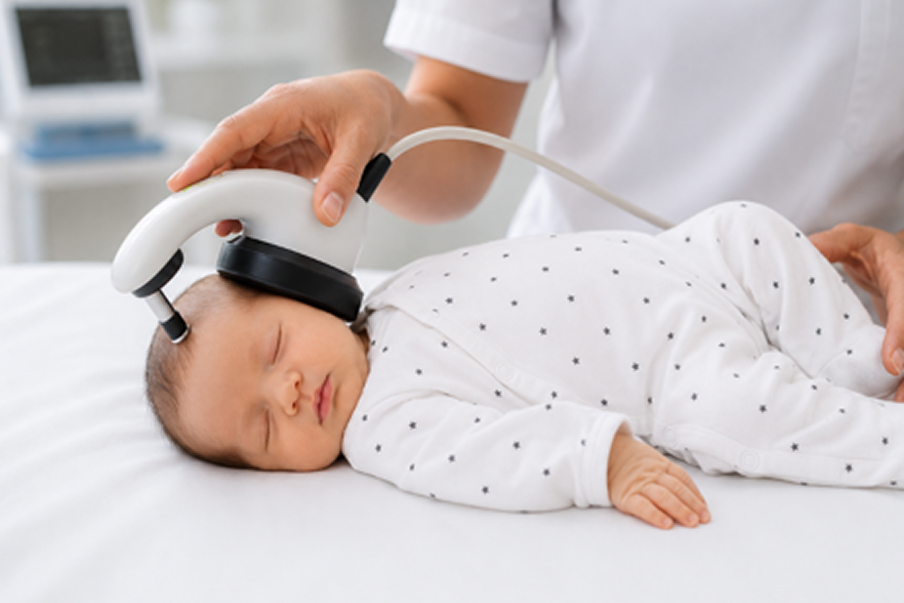
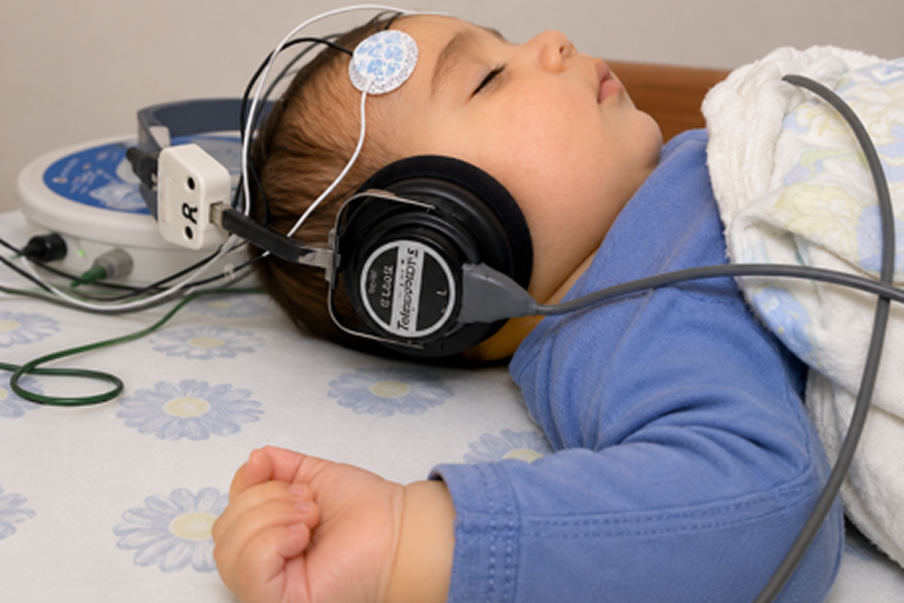
Brain Evoked Response Auditory (BERA) – it is an electrophysiological, non-invasive test to examine hearing systems in children. It measures latency of transient sound stimuli to reach the brainstem area. It will help to diagnose hearing problems.

Brain Evoked Response Auditory (BERA) – it is an electrophysiological, non-invasive test to examine hearing systems in children. It measures latency of transient sound stimuli to reach the brainstem area. It will help to diagnose hearing problems.
This hearing examination can determine how severe is hearing loss and type of abnormality (conductive or sensorineural) along with location of lesion causing hearing loss (inner ear or other parts) of the child.
In addition, in determining the hearing threshold, BERA is also used in otoneurologic diagnosis. This is useful for patients with unilateral or asymmetrical hearing loss (hearing nerve tumors, brain tumors, other nerve disorders, multiple sclerosis, etc.).


Procedure – BERA can be done without the patient needing to do anything. Patients only need to lie down and preferably in a calm attitude or while sleeping. For children, this examination can be done in the wake or sleep. Electrodes will be placed on the patient’s head and behind the ear during the BERA test procedure. When the examination is done, the patient will hear various sounds through headphones. This examination measures changes in brain electrical activity (EEG) in the provision of acoustic stimuli. Abnormalities that occur in the transmission of signals when the sound is heard indicates hearing loss.

© 2026 Ansa Clinic | A SUMATI CLINIC PVT. LTD. INITIATIVE
Powered By : Adit Microsys